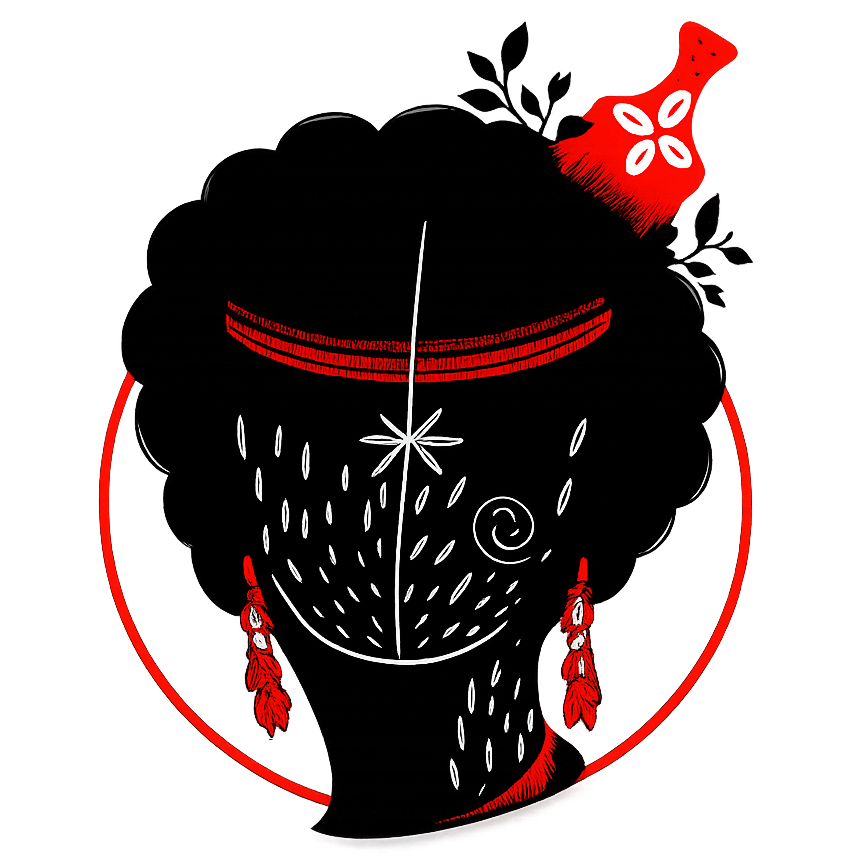
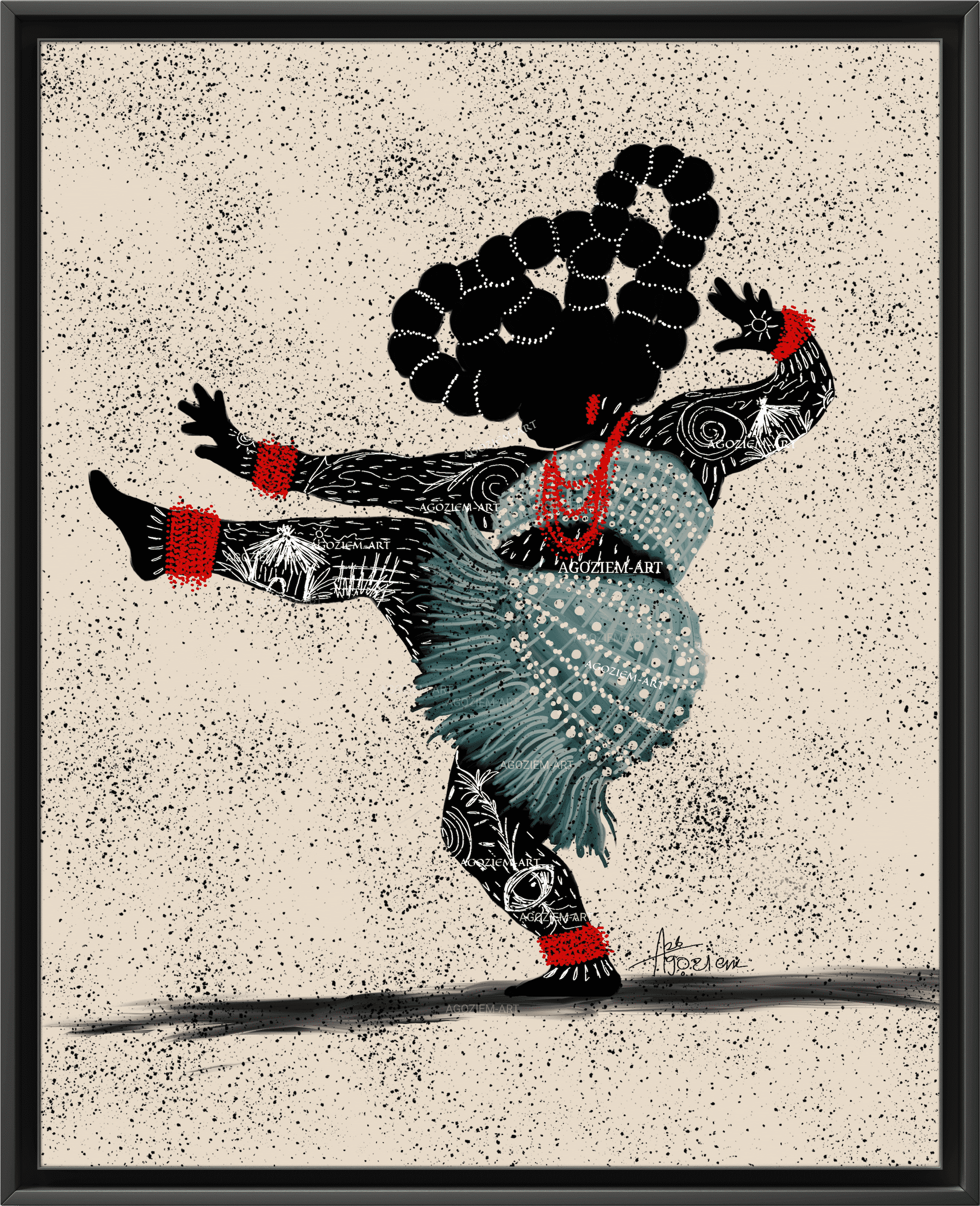
Inspired by the ancient name Mmiri Mma, this work expresses deep reverence for water as a source of life, beauty, and nourishment. It reflects water not only as a physical necessity but as a symbol of grace, strength, softness, and the sustaining rhythm of existence.
The eyes, whether one eye or three, represent knowledge and experience drawn from both the physical state and experiences beyond the body.
When Igbo people say “Ahụla m ọtụtụ ihe na ndụ a,” they are not speaking of what they have merely seen with their eyes, but of what they have lived through, understood, and perceived as spirit beings existing in a physical body. These experiences cultivate the ability to understand what is invisible to others.
The spiral on the body draws from forms found in Uli and in nature itself: the shell of the snail, the movement of snakes, and the unfolding patterns of life. The spiral reflects cycles of life, death, continuity, regeneration, reincarnation, and rebirth. Nothing truly ends; everything transforms.
Our ancestors recognized these patterns everywhere, in the structure of the umbilical cord, the first sprouts emerging from the soil, the rings inside a cut tree, the lines of our palms, and the center of our hair, all of which carry spiral forms. Even the Milky Way is spiral in nature, just as the Earth itself spins in continuous motion.
The hut symbolizes our origin, the place we come from. It represents the essence of home, a presence we carry within us even in foreign lands. It explains why our accents differ, why our beliefs and way of life stand apart, a reflection of where our roots first touched the earth.